
Standard Queen size bed dimensions are 60 x 80 inches long, but there's more to Queen mattresses than this basic measurement. Shoppers should consider room size, frame design and bulk, personal sleeping needs, and variations in Queen sizing. There are other bed dimensions out there, and making the wrong choice can lead to less than ideal sleep conditions.
Skip bumping knees with your partner or cramped bedroom space, and pick the right mattress size for your needs.
Key Takeaways
A standard Queen mattress measures 60" × 80" (152.4 × 203.2 cm), making it 7 inches wider and 5 inches longer than a Full while sharing the same 80-inch length as a king.
A 10' × 10' bedroom is generally the minimum comfortable size for a Queen, while a 12' × 12' room provides more walking space and flexibility for nightstands, dressers, and other furniture.
Measure the entire bed setup, not just the mattress. Headboards, side rails, upholstery, and footboards can add several inches to a Queen's 60" × 80" footprint.
Queens are a versatile choice for couples and spacious solo sleeping, but families who regularly co-sleep with children or multiple pets may appreciate the extra width of a King.
Not every Queen is 60" × 80". California, Olympic, split, and RV Queens have different dimensions, so always confirm mattress, frame, and bedding compatibility before buying.
How big is a Queen?
A standard Queen is 60" × 80" or 152.4 × 203.2 centimeters. Queen bed dimensions refer to the mattress alone, not the frame. Since most folks prefer sleeping with a bed frame, your new Queen may be a few inches longer and wider than the 60" × 80" standard.
You also should consider bed height. Mattress thickness ranges from around 8” to 14” and affects the way your Queen takes up visual space in your bedroom. Most mattresses are in the 10” to 11” range, with larger-bodied sleepers preferring 13” mattresses.
Queen vs other mattress sizes
Below are all the standard mattress sizes and their dimensions in inches and centimeters. You’ll note a few interesting measurements, and your perception of mattress sizes may be challenged.
Many folks are shocked to see that Queens and kings have the same length (80”) but different widths. Extra-tall sleepers only truly benefit when moving from a Queen to a California king, when that gets you an extra 4 inches in length.
Mattress Size | Inches | Centimeters |
|---|---|---|
Twin | 38" × 75" | 96.5 × 190.5 cm |
Twin XL | 38" × 80" | 96.5 × 203.2 cm |
Full | 53" × 75" | 134.6 × 190.5 cm |
Queen | 60" × 80" | 152.4 × 203.2 cm |
King | 76" × 80" | 193.0 × 203.2 cm |
California King | 72" × 84" | 182.9 × 213.4 cm |
Queens are longer and wider than Fulls, offering more personal space per sleeper in all directions. Price per bed goes up as size does.
What room size do you need for a Queen bed?
Queen-size mattresses are basically 5 feet wide by 6.5 feet long, so the smallest room they comfortably fit in is a 10’ by 10’. Ideally, the room would be a bit larger, though, around 12’ by 12’. A room this size is 144 square feet.
A Queen bed takes up around 33 square feet
Nightstands take up around 5 square feet
A dresser is another 8 square feet
Miscellaneous laundry piles and knickknacks take up around 10 square feet
That leaves you with over 85 square feet of walking clearance and usable space around the bed. It’s plenty of room for most people to fit in other wants like a sewing corner or a work-from-home office setup. This can all be tough to visualize, so outline the bed size with painter's tape to get a better idea of footprint before buying.
Queen headboard and bed frame dimensions
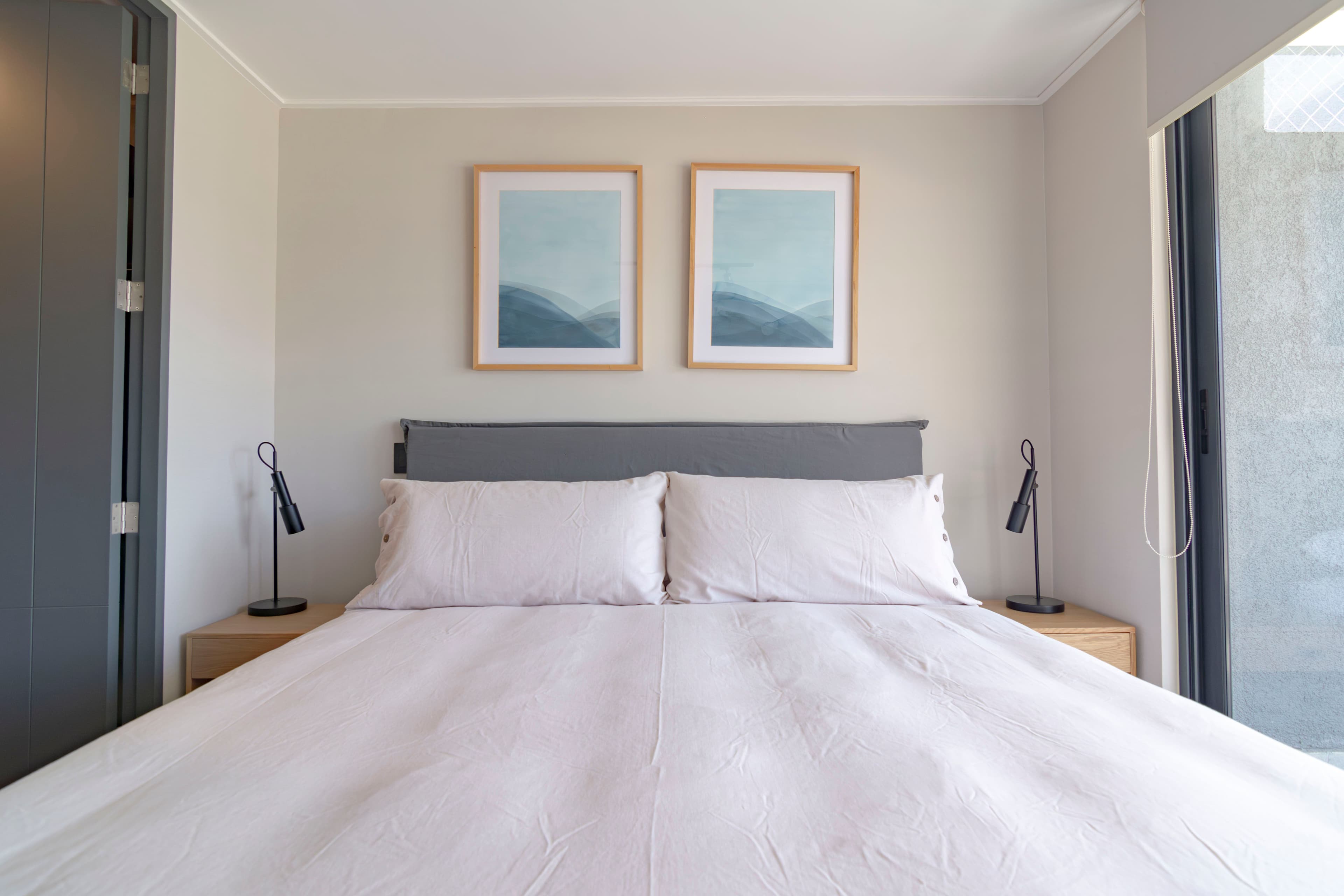
Since headboards, side rails, footboards, and other frame details can add a few inches to the overall mattress footprint, you have to plan for the whole bed, not just the part you sleep on. A Queen headboard/frame setup is typically a little wider than the mattress, often around 62 to 86 inches wide, but height varies much more.
Many standard headboards are roughly 48 to 60 inches tall, while statement styles like four-poster beds can stretch well beyond 60 inches. Taller isn't necessarily better, but it does give your room a regal feeling. Bed frames also vary by design. A streamlined platform frame might add only a couple of inches, but frames with thick upholstery or a long footboard can take up considerably more floor space.
The best rule of thumb is always to check your frame's overall width, length, and height and compare that to the room dimensions. If you're dreaming bigger with a towering headboard or canopy frame, don't forget to look up. Measure your ceiling height along with your floor space, especially in rooms with sloped ceilings or low-hanging light fixtures. Your bed should make a statement, not make the ceiling fan unusable.
The good news is that standard Queen bed frames and mattresses are compatible across the industry.
Box springs, foundations, and support
These are some of the more common types of bed supports.
Box spring: A wood or wood-and-metal frame containing springs and covered in fabric. They’re not recommended for foam or hybrid mattresses, like the Leesa mattresses, which need a firmer, more stable surface.
Platform bed: An all-in-one base that provides sturdy support and airflow while typically offering more under-bed storage. They also come in decorative and low-profile designs, so they're a good choice when you want the bed itself to be part of the room’s look.
Adjustable base: A supportive base that lets you change the mattress position for sleeping, lounging, or relaxing. It offers sturdy support, airflow, and greater versatility.
Queen beds, like all beds, need to be off the ground to allow for air circulation and prevent pests. Your bed should also be low enough that when you’re sitting on the edge of the mattress, your feet are nearly flat on the floor. A bed that’s too high is a recipe for midnight pee breaks that turn into slip-and-falls.
When a Queen is (and isn't) the right fit
Every sleeper is unique, so while you may sleep like a starfish and take up the whole bed, your partner or friend may sleep curled up in a tight ball. This makes bed size a bit complicated.
That said, a Queen is often considered the best bed option for most couples. It gives each sleeper enough personal space for a good night's rest. A full is sufficient for solo adults, guest rooms, teens, and those who sleep solo but with 1-2 pets.
Folks tend to size up to a King size bed or California King bed when they have the physical room size, or they’re co-sleeping with children or a zoo's worth of animals. Later in life, a California King can come in handy during perimenopausal night sweats, giving sleepers the space to cool down.
Non standard Queen sizes
The most well-known alternative bed size is the Alaskan King, at a mammoth 108” by 108”. Other, lesser-known, non-standard Queen bed sizes exist. You won’t find many of these options at your standard mattress stores, but they are an attractive option for select sleepers.
California Queen: Measures 60" × 84" and is a good option for taller sleepers who don’t need the full width of the California King.
Olympic Queen: Measures 66" × 80" and is well-suited to those who are co-sleeping with multiple children and/or pets.
Split Queen: Two mattresses that measure 30” x 80” and are designed to independently adjust on an adjustable base bed frame. The split Queen is the more common configuration.
RV or short Queen: Measures 60” by 75” and is designed to fit in smaller recreational vehicles.
Always confirm compatibility before buying a non-standard size.
Buying a Queen mattress
For many, the Queen is the sweet spot for mattress size. It's roomy enough for two sleepers without taking over the entire bedroom. The trick is finding the right Queen for your sleep style.
Leesa offers Queen mattresses across a range of constructions and comfort levels.
All-foam: A good fit if you prefer contouring comfort and motion isolation without the bounce of coils.
Hybrid: Combines cushioning foam with individually wrapped springs for more responsive support and airflow.
Cooling hybrids: Add enhanced cooling features for sleepers who regularly wake up hot.
Look beyond comfort
What goes into your mattress matters, too. Depending on the model, Leesa mattresses carry certifications that independently verify materials and emissions.
CertiPUR-US® certified foams: Tested for low VOC emissions and made without formaldehyde, ozone depleters, certain prohibited phthalates, heavy metals, and specified flame retardants.
GREENGUARD Gold certification: Indicates a mattress has been tested to meet stringent standards for low chemical emissions.
Fiberglass-free construction: Means you don't have to worry about fiberglass being used as a fire barrier.
Across the lineup, Leesa uses materials like GreenFlex® Foam*, a responsive foam made with plant-based ingredients and designed for cooling comfort and lasting support.
Give your Queen a proper test run
A few minutes lying on a mattress in a showroom can't tell you how you'll feel after eight hours or eight weeks. Leesa offers a 365-night trial, giving your body time to adjust before you make the final call.
Standard shipping is free to all 50 states, with In-Home Setup & Removal by Ryder available at checkout for an extra fee. Prefer to try before you buy? You can also test Leesa mattresses at participating retailers nationwide, including Pottery Barn and West Elm.
Selecting the best mattress for your needs
At 60" × 80", a Queen mattress earns its popularity. It gives couples room to stretch out, gives solo sleepers permission to starfish, and fits comfortably in most bedrooms without swallowing up the rest of the room.
But before you crown the Queen, break out the measuring tape. Remember that 60" × 80" is the mattress size, not the total footprint of your bed. Once you know a Queen fits, the fun part is finding the right one.
Explore Leesa's Queen mattresses to compare foam, hybrid, cooling, and specialty options. Check out the Leesa mattress size guide for a closer look at dimensions, or take the Leesa mattress quiz to match your sleep style with the perfect bed.
Then, all that's left to do is sleep on it.
*The 26% biobased content of GreenFlex® Foam has been verified through third-party testing under the USDA BioPreferred® Program,ensuring compliance with rigorous standards for renewable material content.