
You've done the research. You've read the reviews. And somewhere along the way, you probably noticed that edge support comes up as a concern. It's a fair thing to wonder about, especially if you tend to sleep near the edge of the bed, share your mattress with a partner, or just want to know exactly what you're getting before you buy.
Here's what the conversation usually misses: edge support in a mattress isn't a brand-level characteristic, it's a construction story. And Leesa makes more than one type of mattress. The answer to "does Leesa have good edge support" depends almost entirely on which Leesa you're looking at.
This guide breaks down what edge support actually means, why it varies so much from one mattress to the next, and which Leesa is the right choice if edge support matters to you.
Key Takeaways
Edge support is a construction outcome, not a brand feature. It comes down to what the mattress is made of foam vs. hybrid coil systems.
All-foam mattresses compress uniformly at the perimeter. This is a property of foam, not a defect, but it does mean softer edge support.
Leesa's hybrid lineup uses lower-gauge reinforced perimeter coils across all hybrid models, designed specifically to resist compression at the edges.
Edge support matters most for couples, heavier sleepers, and anyone with limited mobility who relies on the bed's perimeter.
What Is Edge Support in a Mattress?
Edge support refers to how well a mattress maintains its structure when weight is applied near the perimeter whether you're sitting on the side of the bed to put on shoes, sleeping close to the edge, or getting up in the morning. A mattress with strong edge support holds firm and stable under that pressure. A mattress with weaker edge support compresses noticeably, which can feel like the mattress is "giving way" beneath you.
It sounds like a minor detail, but it matters in a few specific situations:
Couples who want to use the full width of the mattress edge support is what makes that feel stable rather than precarious.
Heavier sleepers, where greater body weight concentrated at the perimeter increases the compression effect.
Anyone with limited mobility who uses the bed edge as a surface to push up from when getting in or out of bed.
Back and side sleepers in smaller bed sizes who naturally sleep closer to the perimeter.
If none of those describe you (i.e. if you sleep centered on the mattress and primarily use the edge as a brief sitting surface), edge support may not be a meaningful factor in your decision.
How Mattress Construction Determines Edge Support
Edge support isn't added on top of a mattress. Rather, it's a result of how the mattress is built. Two fundamentally different constructions produce two fundamentally different edge behaviors.
All-foam mattresses
Memory foam, poly foam, and combinations of the two respond to pressure wherever it's applied. The foam doesn't "know" whether weight is at the center or the edge, it compresses the same way in either place. There's no structural reinforcement at the perimeter. This is what makes all-foam mattresses excellent for pressure relief and body contouring: that yielding, conforming quality is the feature. The tradeoff is that the same yielding quality applies at the edges.
Hybrid mattresses with standard coils
Hybrid mattresses combine a foam comfort layer with a coil support core. The coils provide rebound and structural integrity throughout the mattress, which generally improves edge behavior compared to all-foam. But how much improvement depends on whether reinforced perimeter coils are part of the construction.
Hybrid mattresses with reinforced perimeter coils
This is the construction that specifically addresses edge support. Lower-gauge steel coils at the mattress perimeter are thicker and firmer than the interior coils. They're engineered to resist compression under direct weight at the edges. Sitting on the side or sleeping near the perimeter feels stable and supportive, not soft and compressing. This is the construction used across Leesa's hybrid lineup.
Does Leesa Have Good Edge Support?
The honest answer is: it depends on the model. Leesa makes both all-foam and hybrid mattresses, and the edge support experience is genuinely different between them.
All-foam models Original, Studio
The Original and Studio are all-foam mattresses built for pressure relief and conforming comfort. Because foam compresses uniformly, the perimeter compresses under direct pressure sitting on the edge or sleeping at the very perimeter will feel noticeably softer than the center of the mattress. These are excellent mattresses for the right sleeper, but if consistent edge support is a priority, they're not the best fit.
Hybrid models Original Hybrid, Oasis Chill, Legend Chill, Sapira, Sapira Chill
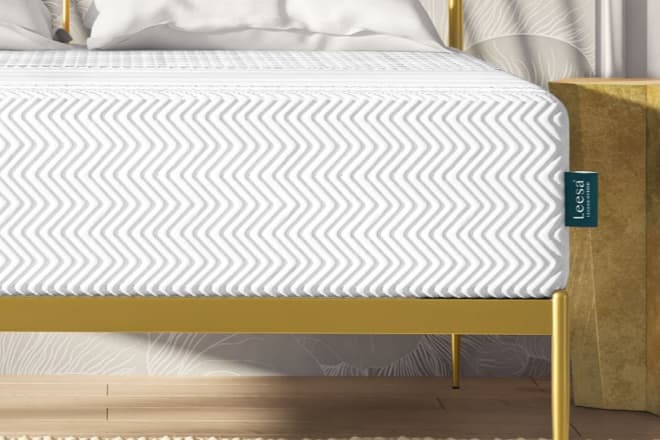
All of Leesa's hybrid mattresses use reinforced lower-gauge steel coils along the perimeter. This applies across the entire hybrid lineup Original Hybrid, Oasis Chill, Legend Chill, Sapira, and Sapira Chill. The perimeter holds firm under direct weight. Sleeping near the edge feels secure, and sitting on the side of the mattress doesn't produce the pronounced compression you'll find in the all-foam models.
For shoppers where edge support is a deciding factor, the Sapira Chill is Leesa's top option. It pairs the reinforced perimeter coil system with a pillowtop comfort layer and active cooling technology making it a strong choice for sleepers who want firm edges, a premium hybrid feel, and temperature regulation in one mattress. It's also one of the better options for couples who want to use the full sleeping surface.
Who Actually Needs Strong Edge Support?
Edge support is one of those features that matters a lot for certain sleep profiles and very little for others. Worth thinking through before it becomes a deciding factor:
Couples sharing a bed. Strong edge support expands the usable sleeping surface. When the perimeter holds firm, both sleepers can comfortably use the full width without feeling like they might roll off.
Heavier sleepers. More body weight at the perimeter means more compression. A reinforced coil perimeter becomes increasingly important at higher weight ranges to maintain consistent support near the edges.
Sleepers with limited mobility. Anyone who uses the side of the bed as a stable surface to push up from - whether due to age, injury, or a health condition benefits significantly from a firm, non-compressing edge.
Back and side sleepers in smaller sizes. In a Queen or smaller, sleeping close to the perimeter is more common. Edge support becomes more relevant when the usable surface feels smaller.
If any of those apply, a Leesa hybrid is the right category. The Sapira Chill and Sapira are the specific models to look at. If you sleep centered and prioritize contouring pressure relief above all else, the foam models remain strong options. Edge support just isn't their strength.
Frequently Asked Questions
Does the Leesa Sapira Chill have good edge support?
Yes. The Sapira Chill is built with reinforced lower-gauge steel coils along the mattress perimeter specifically designed to resist compression at the edges. Sitting on the side of the mattress feels firm and stable, and sleeping near the perimeter doesn't produce the soft, compressing feeling you'll find in all-foam models. The Sapira Chill is the strongest edge support option in the Leesa lineup and is also one of their best hybrid mattresses for hot sleepers, combining the reinforced perimeter construction with a phase-change cooling cover and pillowtop comfort layer.
Is the Leesa Original a good mattress if I sit or sleep on the edge often?
Probably not the best fit. The Leesa Original is an all-foam mattress, and all-foam construction compresses uniformly at the perimeter. The same yielding quality that makes it excellent for pressure relief also means the edges compress under direct weight. If you sit on the edge of the bed regularly, sleep near the perimeter, or have limited mobility that requires using the mattress edge as a stable surface, the hybrid lineup is a better match. The Original Hybrid, Sapira, and Sapira Chill all use reinforced perimeter coils that address exactly this concern.
What is the difference between Leesa's foam and hybrid mattresses for edge support?
The difference is construction. All-foam Leesa mattresses the Original and Studio have no structural reinforcement at the perimeter, so they compress at the edges the same way they compress anywhere else on the surface. Leesa's hybrid mattresses use a coil support system with lower-gauge reinforced perimeter coils: thicker, firmer coils specifically placed at the edges to resist compression and maintain a stable surface near the perimeter. For shoppers who prioritize edge support, the hybrid lineup is the right category. The all-foam models excel at pressure relief and body contouring, but perimeter firmness is not what they're optimized for.
Are Leesa's hybrid mattresses good for hot sleepers?
Several of Leesa's hybrid mattresses include active cooling technology, making them a strong option for hot sleepers who also want firm edge support. The Sapira Chill and Oasis Chill both incorporate cooling covers and temperature-regulating materials alongside the hybrid coil system. The Sapira Chill in particular combines reinforced perimeter coils with a phase-change cooling cover making it a practical choice if you run warm, sleep near the edge, or share the bed with a partner. It's among the best cooling mattresses in the Leesa lineup and the top option for sleepers where both edge support and temperature regulation matter.