
It’s hard enough to get a good night’s sleep when you’re not pregnant. Now add a growing stomach, the pains of pregnancy, and questions about sleep restrictions. It’s normal for expectant mothers to be confused.
Knowing what you can and can’t do as your pregnancy progresses can reduce stress and help you prepare for upcoming sleep changes. Use this guide to learn the dos and don'ts of sleeping while pregnant. Because if anyone deserves a good night’s sleep, it’s you.
Key Takeaways
Sleeping on your stomach during pregnancy is generally safe for you and your baby, but it often becomes uncomfortable as your belly grows.
Most pregnant women naturally transition to side sleeping around weeks 16 to 20, though there's no set deadline for giving up stomach sleeping.
Sleeping on either side is a good option later in pregnancy, and supportive pillows can relieve pressure on your hips, back, and growing belly.
A pressure-relieving mattress, breathable bedding, and consistent sleep habits can help you stay comfortable and get better rest throughout pregnancy.
The short answer
The question expectant parents have is, “Will sleeping on my stomach during pregnancy harm my baby?” According to modern medicine, the answer is no. Sleeping on your stomach at all stages of pregnancy is considered safe for mother and baby.
The amniotic sac and amniotic fluid protect and cushion a fetus throughout pregnancy. The real issue is that as your belly grows during the second and third trimesters, it becomes nearly impossible to sleep on your stomach. It’s like sleeping balanced on a watermelon, except the watermelon moves. It’s far from ideal.
Expectant mothers can reach out to their OB or their qualified pregnancy professional for specific questions and concerns about maternal sleep position.
How sleep changes across each trimester
Comfortable positions change fast, so what works at week 8 probably won't cut it at week 28. This is especially compounded by the fact that women tend to sleep worse over the course of the pregnancy.
First Trimester: General fatigue and nausea are common, along with hormonal changes, but you have a lot of freedom with sleep positions.
Second Trimester: Your baby’s weight will multiply more than 7 times, but some women still don’t show much of a belly. Hormones even out, and general sickness lessens, often leading to better sleep.
Third Trimester: Frequent nightly bathroom trips, a large belly, pelvic discomfort, heartburn, and leg cramps make it challenging to get a solid 7-9 hours of uninterrupted nightly sleep.
Typically around week 20, your provider may recommend avoiding back sleeping. Sleeping on your back later in pregnancy is associated with reduced blood flow to mom and baby.
When most people stop stomach sleeping
There is no fixed date or trimester when people stop sleeping on their stomachs, but typically, pregnant women flip to their side when they ‘pop,’ around weeks 16 to 20.
It's not only awkward to sleep on your bigger stomach, but as the abdomen grows past the pelvic bones, it puts more pressure on your lower back and chest. This makes it harder to breathe deeply, especially when sleeping on your stomach.
The good news is that you have time to transition away from stomach sleeping. You don’t grow overnight. Listen to your body's cues and start practicing side sleeping when you notice back strain, pelvic discomfort, trouble breathing deeply, or when the position just feels wrong.
Best sleeping positions by trimester
Your body is changing, and so too is your sleep position. These are the best sleeping positions in each trimester.
First Trimester: Choose whatever position lets you actually sleep, absent pain or breathing trouble.
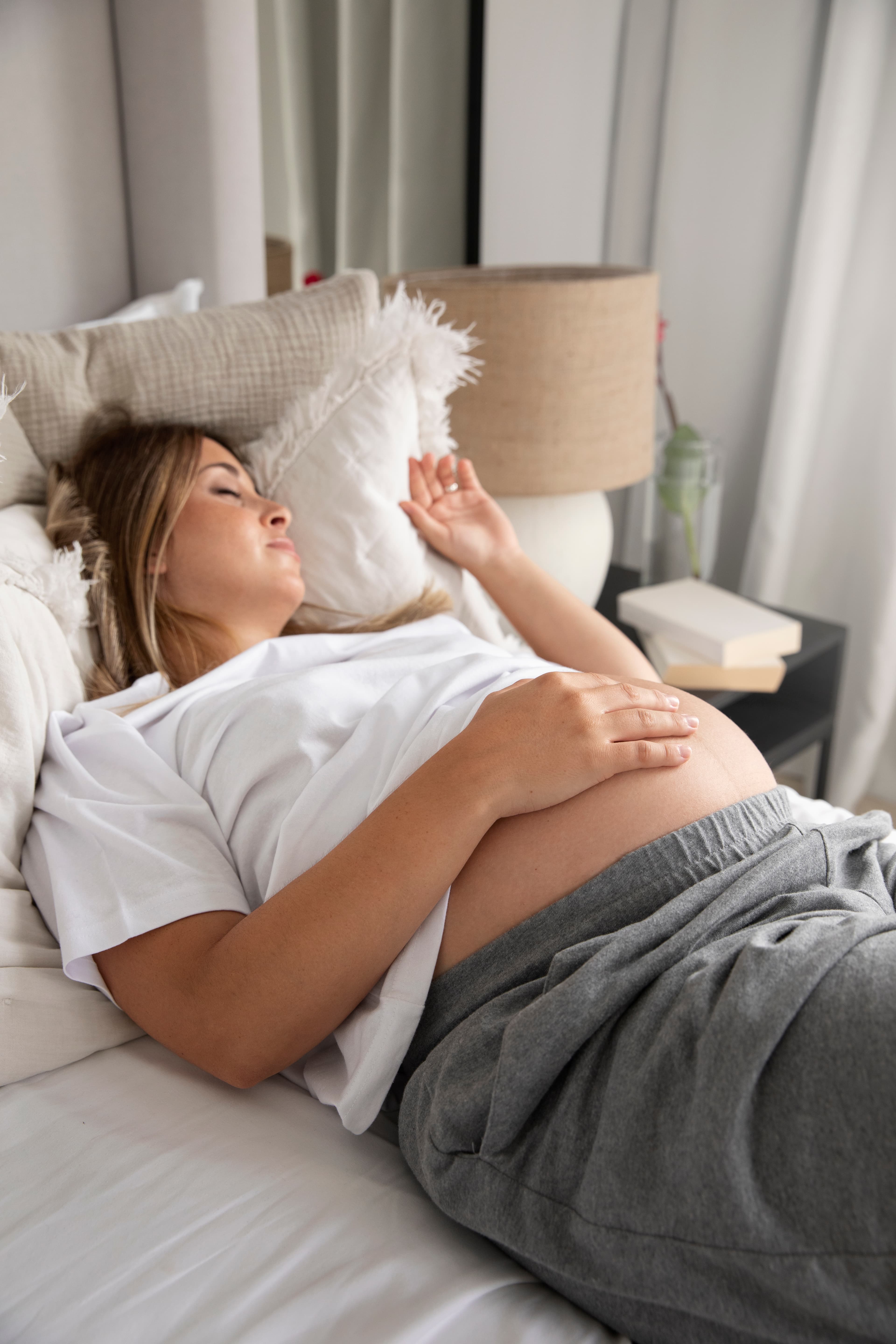
Second Trimester: Side sleeping becomes the practical default as the bump grows. Sleeping on your left side may increase blood flow to the baby, but sleeping on your right side is perfectly acceptable.
Third Trimester: Most prefer a supported side position with knees bent and pillows at the bump and between the knees
Making side sleeping work if you've always slept on your stomach
Breaking a lifelong sleep habit is genuinely frustrating. Your body isn’t used to the changes it's going through, and on top of that, you have to find a new, comfortable sleep position. The good news is there are steps you can take to make sleeping on your side a pleasant, restful experience.
It’s time to gather your army of pillows. Place a pillow between your knees to keep your hips stacked, and pop a pillow behind you to prevent nighttime wiggling and keep you from rolling onto your back. Finally, place a small, thin pillow under your bump for extra support.
If you prefer, instead of a bunch of pillows, you can try a single specialty pregnancy pillow. Remember that it takes experimentation to find out what works for you, and it may take a few nights to get used to your new setup.
Full-length Pregnancy Pillow: Think of it as a body pillow, but better. Hug it while you sleep and tuck it between your knees to support your hips, legs, and growing bump.
U-shaped Pregnancy Pillow: This wraparound design supports your front and back simultaneously, making it easier to switch sides without adjusting your entire pillow collection.
C-shaped Pregnancy Pillow: A cozy curve that cradles your head, bump, and legs. It relieves pressure on your hips and lower back while keeping you comfortably curled on your side.
These specialty pillows may make it easier to get into the three-quarter position, when you’re partly rolled toward your belly. They're the closest most pregnant women can get to stomach sleeping.
Pillows also help prevent accidental back sleeping, so your uterus won’t press on major blood vessels.
Setting up your mattress and bedding
For many, pregnancy can be pretty uncomfortable. Rapid physical changes can make a mattress that felt fine two weeks ago suddenly feel too firm at the hips or too soft at the lower back. The right sleep setup can help ease some of that discomfort. Here's what to look for:
Balanced Firmness: Look for a medium-to-medium-firm mattress that keeps your spine aligned without letting your hips sink too deeply or creating uncomfortable pressure points.
Pressure Relief and Support: Side sleeping puts more weight on your shoulders and hips. Contouring foam cushions these areas while supporting the rest of your body and adapting as you grow.
Motion Isolation: Between bathroom breaks and the nightly hunt for a comfortable position, you're probably moving more than usual. Motion isolation helps keep those movements from disturbing a partner, pets, or a co-sleeping toddler.
Cooling Powers: Pregnancy can turn even the coolest sleepers into human space heaters. Breathable foams and cooling materials can help keep nighttime overheating in check.
If you're not looking to invest in a new mattress, then options like a mattress topper for cushioning or lightweight cotton for added cooling can be a good choice.
However, if your current mattress isn't cutting it anymore, Leesa's Sapira Chill Hybrid mattress balances pressure relief, responsive support, and cooling comfort, while the Legend Chill Hybrid mattress offers a softer, more cushioned feel with zoned support and excellent motion isolation. Both can help make those precious hours of pregnancy sleep a little more comfortable.
5 habits that make any position work better
Even the perfect pregnancy pillow can't fix poor sleep habits. Finding a comfortable position is only half the battle. These five habits can help you get better rest, even as your pregnancy symptoms change.
Stick to a Sleep Schedule: Try to go to bed and wake up around the same time every day. A consistent routine helps regulate your internal clock, even when pregnancy symptoms make sleep unpredictable.
Wind Down Before Bed: A few minutes of slow, intentional breathing or a warm bath before bed can help your body switch from go-mode to sleep-mode.
Rethink Your Evening Snacks: Large meals close to bedtime can worsen pregnancy heartburn. Stick to smaller evening meals, and keep caffeine earlier in the day so it doesn't crash your sleep party.
Set The Scene for Sleep: Put your phone down about an hour before bed and, if possible, keep your bedroom cool, dark, and quiet.
Nap Strategically: If bathroom trips or a breakdancing baby consistently interrupt your nighttime sleep, a short daytime nap can help you recharge without making it harder to fall asleep that night.
The occasional trouble sleeping is normal, but persistent insomnia and severe daytime fatigue are not. Your prenatal care provider can help identify underlying issues and recommend pregnancy-safe ways to improve your sleep.
What changes after birth
There are so many changes after you give birth. There’s a new human to care for, and you need rest and time to heal. The physical sleep changes are pretty minimal, though, at least for the first few weeks.
Stomach sleeping may be uncomfortable for a while since you’re still pretty tender, and your pregnancy sleeping setup may be your go-to for a time. Ease back in gradually rather than all at once, and follow your provider's lead on timing. Short naps and sharing nighttime newborn duties with a helper or partner go a long way.
Getting quality sleep during pregnancy
Pregnancy might have you saying goodbye to your favorite sleep position, but it doesn't mean you have to say goodbye to comfortable nights. With the right mattress, a few strategically placed pillows, and healthy sleep habits, you can find a setup that supports your changing body.
Listen to your body's cues and remember you're growing an entire human. You deserve some serious rest. Check out the Leesa offerings and get the sleep you need.
FAQs
Is it okay to lie on my stomach briefly during the day, at the beach or on a massage table?
100% yes. Unless your doctor directs otherwise, you can lie on your stomach at any time during pregnancy.
What if I can only fall asleep on my stomach and nothing else works?
Try easing into side sleeping with a body pillow or a three-quarter position that mimics stomach sleeping without putting direct pressure on your bump. If you're still struggling, talk to your prenatal care provider.
Do I need a special pregnancy mattress?
Not necessarily. Every pregnancy is different, and it’s better to make new sleep purchases as the need arises. A supportive mattress with good pressure relief, balanced firmness, and breathable materials is really all you need.
Can stomach sleeping make pelvic pain worse?
Yes, it can. As your belly grows, sleeping on your stomach may increase pressure on your pelvis and strain your lower back. If you notice discomfort, switch to sleeping on your side with a pillow between your knees to keep your hips aligned and reduce pressure.