Man’s best friend needs to sleep, too, but a dog's sleeping habits differ quite a bit from our own. How do you know when your pup is sleeping normally, or when something’s wrong?
This guide covers the ins and outs of canine sleep habits, explaining why dogs sleep so much and how much sleep they actually need.
Key Takeaways
Adult dogs typically sleep 12 to 14 hours a day, including nighttime sleep and frequent daytime naps.
Sleep requirements change throughout a dog’s life. Puppies and senior dogs generally need more sleep than healthy adult dogs.
Dogs cycle through drowsiness, NREM sleep, and REM sleep, spending nearly three hours per day in REM, when most dreaming occurs.
Sudden changes in sleep habits, especially when paired with lethargy, appetite changes, confusion, or unusual behavior, can signal that it’s time to call the vet.
How many hours do dogs sleep in a day
Adult dogs typically sleep between 12 and 14 hours a day. This includes overnight sleep and their daytime naps. These naps aren’t just your dog being lazy, even if it may seem that way. Dogs are polyphasic sleepers, meaning they sleep often during the day, rather than just one long block at night. This evolutionary trend was meant to keep canines alert for predators and prey. Now, it just means your dog gets plenty of beauty sleep.
Highly active or working breeds may sleep more on days of heavy exertion, but under-stimulated dogs may nap more out of habit.
What your dog's sleeping position says about comfort
There is no single most common sleeping position. Each dog is different, and they often flip-flop between sleep positions during the day. That being said, owners can learn a bit about their dog from their sleep position.
Side Sleeper: legs stretched forward, deep and relaxed sleep, wants room to stretch out
Donut: curled tight with nose to tail, conserving heat and protecting the belly, common in new, shy, or cold dogs
Belly Up: exposed and cooling off, signals trust in the sleep environment
Superman: belly down with legs stretched out, a quick nap between bursts of energy
Lion's Pose: head on front paws, resting but watchful, shows up near doors and in busy homes
Cuddler and Burrower: pressed against people or under blankets, seeking warmth and closeness
Dog sleep by life stage
Like humans, a dog's age affects their sleep requirements. Puppies are growing, and their bodies need to recover as they build muscle and bone. Your cute, cuddly puppy is also learning so much every single day. This mental growth tires them out and requires more sleep.
Age | Typical Sleep per Day |
1–8 weeks | 18–20 hours |
9 weeks–5 months | 12–16 hours |
6 months old | 12–14 hours |
Senior dogs (6–8+ years) |
Senior dogs need more total sleep but get more fragmented rest and wake more often at night for water or bathroom breaks. As older dogs approach the 6- to 8-year senior mark, they may experience more sleep-related discomfort. Joints may start to hurt, and aches and pains disrupt sleep.
How size, breed, and activity level change the number
Generally, activity level and sleep habits are divided into working and non-working breeds. Working breeds, like Siberian Huskies and Portuguese Water Dogs, may be more alert and require less sleep throughout the day. Non-working breeds, like Shih Tzus and the Havanese, are more content to snooze. Giant breeds are the exception; they generally sleep more because of their metabolic demands.
Active dogs crash hard and sleep more deeply. Bored dogs also sleep more, but they tend to sleep restlessly.
How dog sleep actually works
Dogs seem like ridiculous creatures. From chasing their tails to playing keep-away with your socks, they’re a common source of household laughs and joy. Your furry friend’s sleep biology isn't so simple.
A dog's sleep patterns follow a precise routine:
Drowsiness: Resting with the eyes closed but not actually asleep.
Light NREM sleep: A lighter stage of non-rapid eye movement (NREM) sleep.
REM sleep: A deeper stage of rapid eye movement (REM) sleep where most, but not all, dreaming occurs.
Dogs spend nearly three hours a day in REM, compared to under two for humans, and most REM periods tend to occur at night. From the outside, REM may look like twitching paws, eye flutters, whimpers, and pretend running.
Your dog may wake up after a REM cycle, look around, then fall back asleep. This is a normal evolutionary practice that likely kept your dog's early ancestors alive.
Normal sleep versus a possible sleep disorder
Occasional snoring, twitching, and sleeping late are normal and fall within the standard dog sleep cycle. It’s rare for dogs to experience sleep disorders, but it is possible. If you’re seeing odd sleep, your pup may be dealing with one of the following sleep issues.
Obstructive Sleep Apnea: The most common sleep disorder in dogs, obstructive sleep apnea causes temporary pauses in breathing when relaxed airway tissues block airflow. Frequent, loud snoring is a common sign.
Narcolepsy: A neurological sleep disorder that causes sudden, uncontrollable episodes of deep sleep, often during excitement or play.
REM Sleep Behavior Disorder: A condition in which dogs physically act out their dreams during REM sleep, potentially causing violent limb movements, barking, or howling while asleep. Medication is reportedly effective in around 75% of cases.
Some of these disorders are more common in certain breeds. Pugs, for example, and other flat-faced breeds are more likely to suffer from obstructive sleep apnea. Persistent or sudden, dramatic symptoms need a veterinarian, not a home diagnosis.
A vet can also determine whether a more mundane medical issue is causing your dog’s sleep problems. Conditions like arthritis, itchy skin, or frequent urination break up otherwise healthy sleep.
When to worry about how much your dog sleeps
We all worry about our pets, but these sleep signs go beyond normal and signal it’s time to see the vet.
Suddenly Sleeping All Day: If your usually energetic dog turns into a full-time couch potato for more than a day or two, something may be up.
Trouble Waking or Settling Down: Difficulty waking, confusion after sleep, or new nighttime pacing and restlessness can signal that sleep isn’t the only issue.
Changes in Appetite: Extra sleep paired with eating much more or less than usual deserves a closer look.
Less Interest in Company: A social dog who suddenly starts avoiding family members or other pets may not be feeling their best.
More Than Normal Tiredness: Sleepiness, plus skipping walks, ignoring toys, and turning down food. Persistent lethargy is worth discussing with your vet.
New Senior-Dog Behaviors: Nighttime disorientation, wandering, getting stuck in familiar spaces, or unusual vocalizing can signal that an older dog needs a veterinary checkup.
Use a sleep journal to track how much sleep your dog gets, along with changes in sleep, appetite, and habits. This gives your vet a more complete picture and helps you see that sleep isn't the only indicator that something’s off.
How to help your dog sleep better
Many factors affect your dog's sleep habits, but the best way to help your dog sleep well is through a combination of daytime activity, consistent feedings, and a good sleep environment.
Exercise your dog in line with the dog’s age and breed. This may also include mental enrichment through training games and sniff walks. Consistent, scheduled feeding helps, since digestive discomfort can cause restlessness.
Just like humans, your pup sleeps best in a dark, quiet, cool room. A dedicated bed helps the dog associate settling down with rest, especially for older dogs.
What dogs need from a bed
Dogs, like many mammals, benefit from room to stretch out and a material with excellent pressure relief. Senior dogs need a stable surface that is easy to step on and off of. Human owners benefit from durable, easy-to-clean materials that handle shedding, drool, and accidents.
If your dog does sleep with you, a mattress with low motion transfer can help keep their nighttime movements from becoming your nighttime movements. Washable bedding and a mattress protector are also smart additions for handling fur, dirt, drool, and the occasional accident. However, many dogs benefit from their own dog bed.
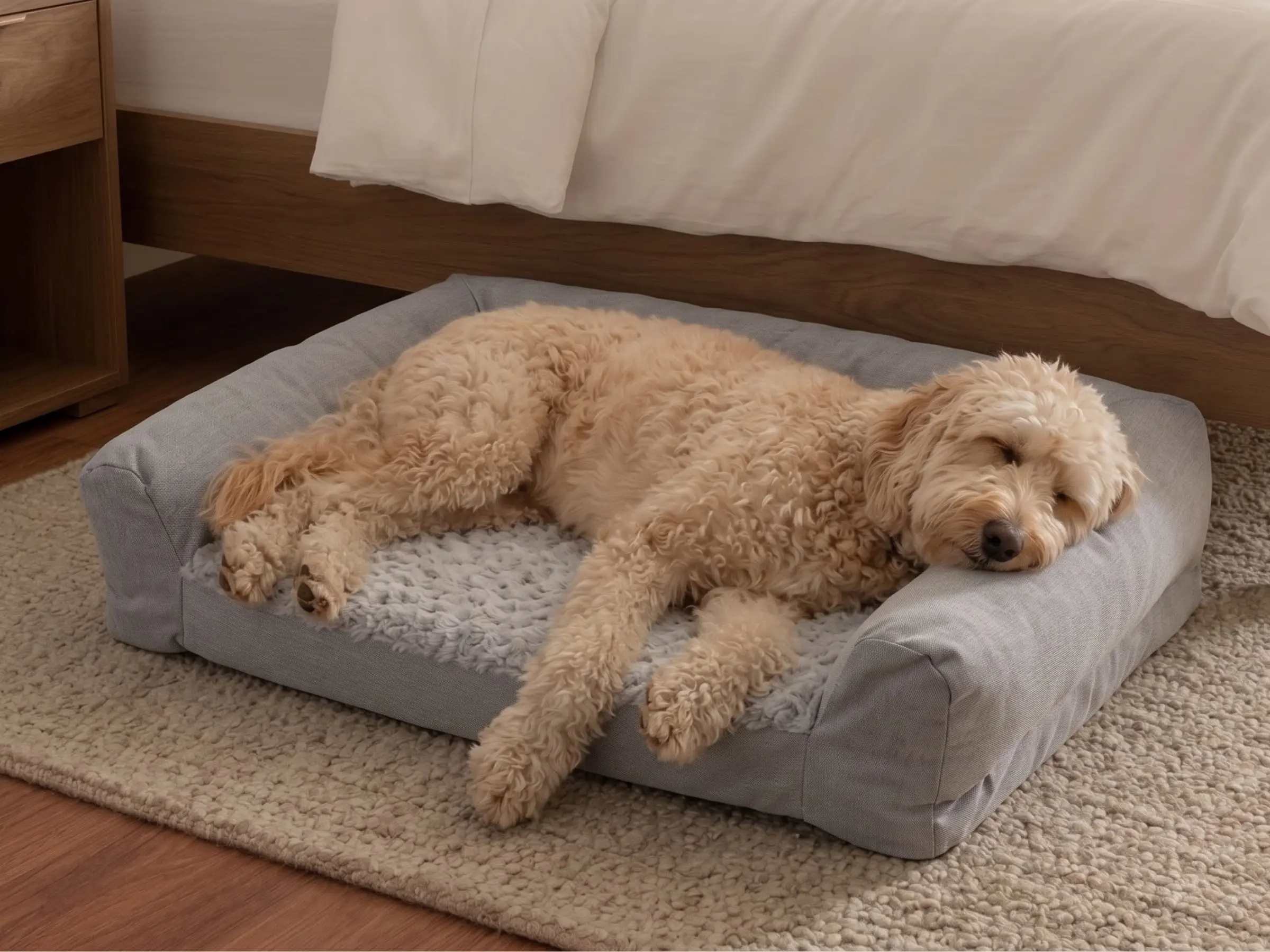
The Leesa Plush Bolster Pet Bed pairs supportive bolsters with soft faux fur and CertiPUR-US® certified foam, giving dogs a cozy place to curl up or stretch out. A waterproof liner, machine-washable cover, and non-slip base make life a little easier for their humans, too.
Your sleep and your dog's sleep
Sharing your bed with your dog has its perks: extra cuddles, bonding time, and a very enthusiastic foot warmer. But co-sleeping can also mean sharing your sleep with every twitch, stretch, position change, and midnight pee break.
Light sleepers may be especially likely to notice a dog dreaming, repositioning, or hopping on and off the mattress throughout the night. If those movements regularly wake you, you don't necessarily have to send your pup packing to another room. Giving them their own bed beside yours can keep them close while giving everyone a little more space to snooze. A separate sleep surface may also be worth considering if seasonal allergies are an issue.
Better sleep isn't just for humans. Give your best friend a snooze-worthy place to dream with the Leesa Plush Bolster Pet Bed.
FAQs
Can my dog sleep too much if they're just bored?
Yes. Under-stimulated or bored dogs may sleep more simply because they have little else to do. However, a sudden increase in sleep that lasts more than a day or two, especially with appetite or behavior changes, may warrant a vet visit.
Is it okay if my dog is awake a lot at night and naps during the day?
Yes, the average dog spends over a third of its day sleeping, and dogs' sleep schedules tend to favor frequent naps. Owners may notice nighttime wakefulness more because it disrupts human sleep.
Do different sleeping positions mean my dog is sick?
Not usually. Dogs naturally switch between sleeping positions based on comfort, temperature, and how secure they feel. A position change alone isn't usually cause for concern.
Should I wake my dog from a deep sleep or a dream?
Usually, no. Twitching paws, eye movements, whimpering, and even pretend running can be normal during REM sleep. Dogs also naturally wake after some REM cycles, so it's generally best to let your pup finish snoozing on their own.
How can I tell if my puppy is getting enough sleep?
Look at your puppy's age and overall behavior. Puppies 1 to 8 weeks old typically sleep 18 to 20 hours per day, while puppies from 9 weeks to 5 months generally sleep 12 to 16 hours. By 6 months, they typically sleep about 12 to 14 hours.