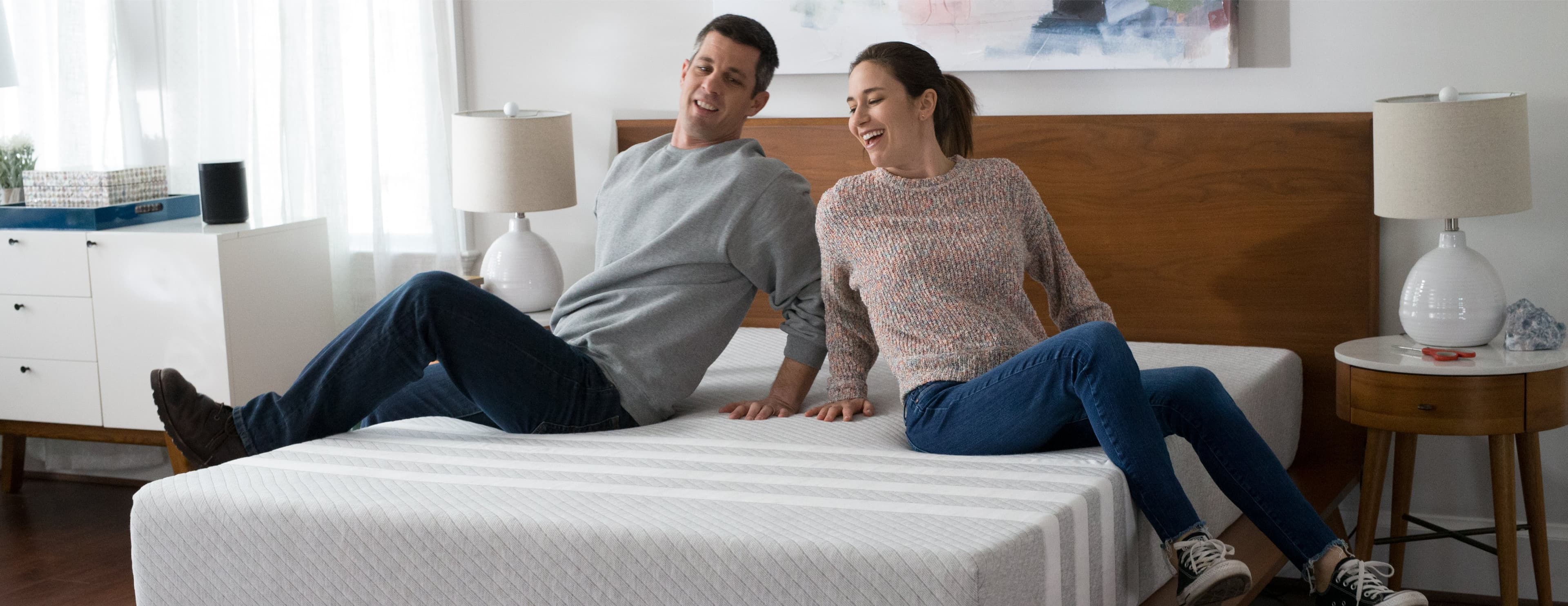

Is it an earthquake? Are you out at sea? No, it’s just your partner, flipping and flopping in their sleep.
This couple’s sleep dilemma is a tale as old as time. You love your partner. You do not love their sleep habits. They constantly move or get up throughout the night, leaving you in a state of pure fury and exhaustion.
This constant motion transfer fragments your sleep stages and negatively impacts sleep quality. You can shake them awake or kick them to the couch, but these are not long-term solutions—for your sleep or the relationship.
Proper motion isolation may be your best option. Learn why motion wakes you up, the science of stopping it, and the best sleep environment for your needs.
How Motion Transfer Disrupts the Sleep Cycle
Sleep isn’t something you can just turn on and off. It’s a biological process that occurs over four stages and repeats in a cycle throughout the night.
Stage 1 (N1): The lightest sleep stage, where your brain shifts from wakefulness to rest, making it easy to wake from even minor movement or noise.
Stage 2 (N2): A stabilizing stage where heart rate slows, body temperature drops, and the brain begins protecting sleep while starting early memory processing.
Stage 3 (N3): Deep, slow-wave sleep where physical repair, immune strengthening, and growth hormone release occur, making this stage essential for feeling physically restored.
Stage 4 (REM): A highly active brain state marked by dreaming, emotional regulation, and memory consolidation that supports learning, mood, and cognitive performance.
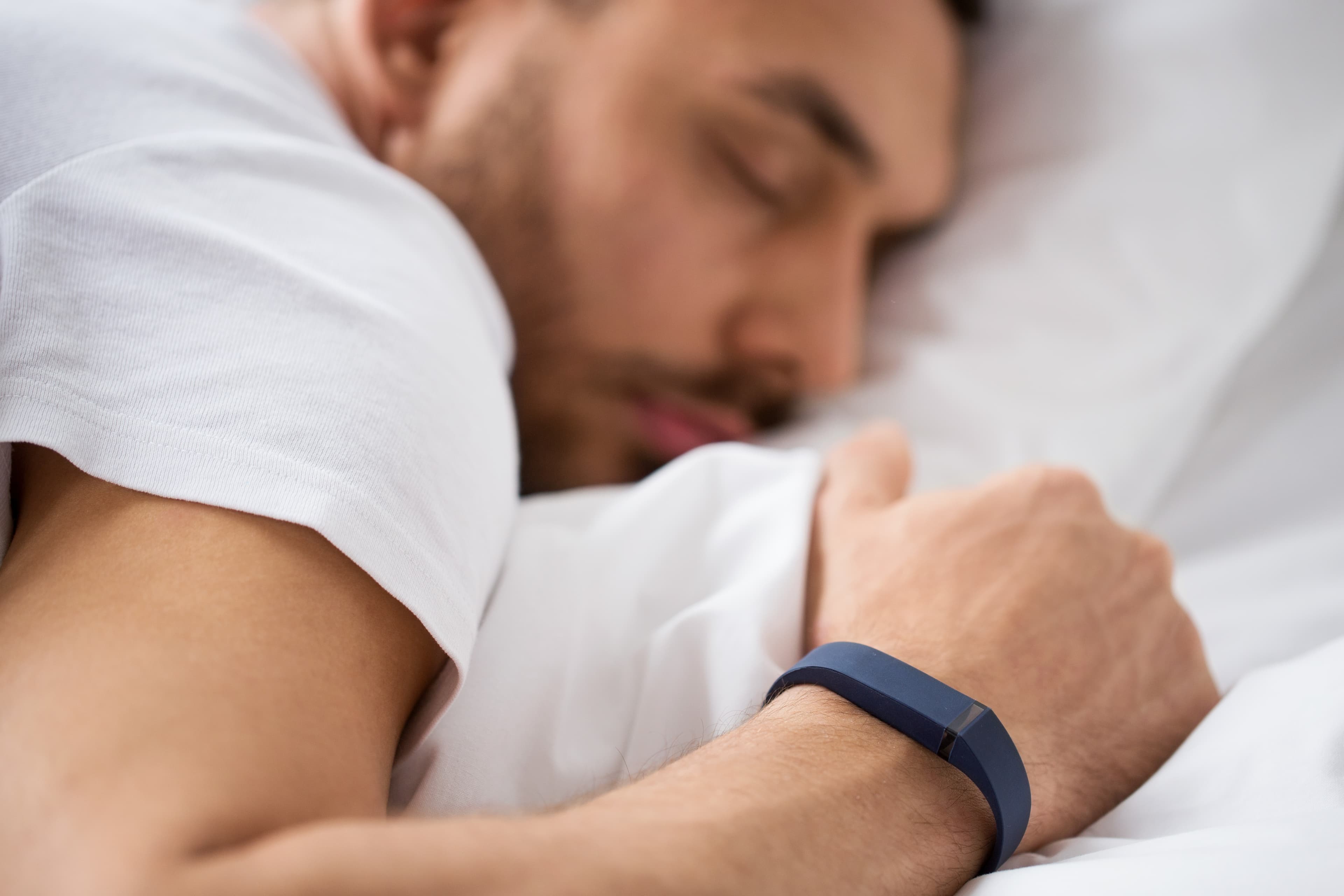
Most people won’t always transition seamlessly from stage to stage and cycle to cycle. Folks tend to experience mini moments of wakefulness that they don’t even remember the next day. They’re called microawakenings, or microarousals, and they only last for around three to 15 seconds.
During this time, your brain shifts from a deeper sleep to a lighter sleep or a brief period of wakefulness. Scientists have recorded an average of 80 arousals per night in adults ages 18–20, 116 arousals in adults ages 31–50, and 130 arousals in adults ages 61–70.
Microawakenings either happen randomly or are triggered by movement, noise, or a change in room temperature. They’re totally normal, except when they start happening more and more throughout the night.
Excessive microawakenings, possibly due to a partner’s movement, can disrupt your sleep cycle, limiting your ability to reach or maintain deep sleep and REM. You might not even realize how many times you’re waking up in the night.
The lightest stages, one and two, are most vulnerable to microawakenings. This is likely when you’re waking up to stare at the ceiling as your partner peacefully tosses and turns.
29% of Americans choose to sleep in a separate bed or in another room within their home to better accommodate a sleep partner. This aptly named ‘sleep divorce’ may feel like the only way you or your partner can get good sleep.
The Science Behind Motion Isolation Technology
Motion isolation is the act of absorbing and containing movement. It refers to how well a mattress limits the transfer of movement from one area to another.
The actual physics of motion transfer can get complicated. Remember in school when you learned that energy can neither be created nor destroyed? That’s the most important principle here.
When your partner gets into bed, the motion you feel across the mattress is a direct result of energy transfer, specifically kinetic energy moving from one object to another. Here’s how it plays out:
The person brings kinetic energy: As your partner sits down or shifts position, their body is moving. That movement carries kinetic energy.
That energy is transferred through contact: When their body presses into the mattress, kinetic energy is transferred from their body to the mattress's materials.
The mattress deforms and spreads the energy: The bed compresses under their weight. Depending on the materials, that energy may spread outward across the surface. If the mattress allows energy to travel easily, the movement can be felt on the other side.
Some energy changes form: Not all of the motion stays as movement. Part of the kinetic energy is transformed into:
Thermal energy due to friction within the mattress materials (so you get warm)
Elastic potential energy as foams or springs compress and then rebound (so the bed bounces)
What the other sleeper feels is the remaining kinetic energy: Any energy that isn’t absorbed or transformed continues traveling through the mattress. This is what causes you to feel shaking or bouncing when your partner moves.
In a good mattress, the energy from your or your partner’s movement gets transferred mostly to the bed’s materials instead of to the other person. Different types of mattresses have different motion isolation benefits.
Memory Foam Mattresses: Several memory foam layers, including high density foam and sturdy recovery foam, combine to cradle your body and absorb energy.
Innerspring Mattresses: Made of primarily traditional or pocketed coils and a thin top layer of padding, these mattresses are supportive but aren’t excellent energy absorbers.
Hybrid Mattresses: Combine the energy absorption of foam with specialized individually wrapped coils for amazing pressure relief and superior motion isolation.
Clearly, motion isolation is not just a marketing claim. The mattress surface, inner foam, and other technology all impact how movement spreads.
Why Motion Isolation Is Critical for Couples' Recovery
Sharing a bed means sharing everything, including blankets, space, maybe even an ill-advised midnight snack. What it shouldn’t mean is sharing every sleepless night and 2 a.m. bathroom trip. For couples, motion isolation isn’t about luxury; it’s about protecting recovery. When one partner’s movement repeatedly jolts the other out of sleep, the body never fully completes the restorative work it’s supposed to do overnight.
Start with the effect of different sleep schedules. One person goes to bed early, the other scrolls until midnight. One wakes up at 5 a.m., the other considers that an act of violence.
Without strong motion isolation, every entrance and exit sends ripples across the mattress, triggering microawakenings that chip away at deep sleep and REM. Add in natural movement during sleep, like switching up preferred sleeping positions, and you’ve got a nightly recipe for disaster.
Then the compound effect kicks in. One disrupted night is annoying, but dozens in a row create sleep debt. When deep sleep and REM are repeatedly interrupted, the body can’t fully repair muscles, regulate hormones, or consolidate memory. You may technically spend eight hours in bed, but biologically, you’re running on fumes. That’s why couples often report feeling unrefreshed or irritable, even when they slept all night.
Without proper isolation, the mattress becomes a shared trampoline instead of a recovery surface. Motion isolation is absolutely necessary. It protects each partner’s sleep stages, so both people wake up restored, not resentful. And that’s good for your health, your mood, and yes, especially your relationship.
How Leesa's Design Delivers Superior Motion Isolation
You may remember the early 2000s red wine mattress commercials. Testers jumped on a bed with a glass of red wine parched on the end. The wine never spilled. This seems miraculous, but completely eliminating motion transfer, at least via early 2000s technology, means sleeping on an unforgiving rock-like mattress.
Modern motion isolation comes from multi-layer foam/innerspring construction, where each layer contributes to motion absorption while maintaining proper support. The result is motion isolation without sacrificing responsiveness or support.
The unique construction of Leesa mattresses offers unparalleled motion isolation performance, and here’s how:
Foam Construction: High-density foam converts motion into heat and compression, stopping it from traveling.
Individually Wrapped Coils: Springs move independently, rather than transferring energy across the bed.
Dual-coil and Foam Layering: The layering is intentional, with each layer absorbing motion before it spreads throughout the mattress.
A few different mattresses stand out for their motion isolation, the Original uses layers of dense memory foam to cradle the body and stop motion in its tracks. The Sapira Hybrid uses individually wrapped coils and layers of foam to provide impressive pressure relief without a ripple effect. Finally, the Reserve Hybrid uses thousands of micro-springs paired with individually wrapped coils and multiple layers of foam to strike the perfect balance between motion isolation and comfort.
Signs Motion Transfer Is Affecting Your Sleep Quality
You need a supportive mattress with excellent motion isolation that keeps your partners shenanigans on their side of the bed. If you notice any of the following signs of poor sleep then it's time to look for a new mattress.
Waking up when your partner gets in or out of bed: If you’re actively waking up every night to their movement then you have a problem.
Feeling your partner's every movement: You shouldn’t be disturbed by your partner just shifting slightly in their sleep.
Waking unrefreshed despite spending 7-8 hours in bed: This is usually a sign that something has gone very wrong with your sleep quality.
Daytime fatigue, difficulty concentrating, irritability: Your sleeping life affects your waking life. Bad sleep means a bad attitude and poor health.
Relationship tension over sleep disturbances: Poor quality sleep, caused by your partner, can and will damage your relationship.
One partner considered sleeping separately: As mentioned, nearly a third of American couples sleep separately. If you’re considering sleep divorce then we have a sleep problem.
Evaluating Motion Isolation When Mattress Shopping
Motion isolation is a feature that’s worth hunting for, especially if you’re a light sleeper or share a bed with someone who treats sleep like a contact sport. The key is understanding a mattress’s ability to absorb movement without sacrificing comfort or support.
When testing motion-isolating mattresses, look beyond buzzwords and focus on how they behave during real movement. Here's what to consider:
Test With a Partner: Have one person sit or roll while the other stays still. A good mattress minimizes movement transfer even during big shifts.
Check Edge Performance: A mattress that offers excellent edge support prevents collapse when one partner gets in or out of bed, helping reduce motion transfer across the surface.
Pay Attention to Firmness: Many couples find a medium firm feel delivers just the right amount of contouring for motion absorption while still providing optimal support.
Evaluate Structure, Not Just Softness: A plush pillow-like top can feel great, but motion isolation depends on what’s underneath—layered foams, independent coils, or both.
Consider Your Setup: Your bed frame matters, too. A sturdy, well-fitted frame prevents excess vibration and supports the mattress’s performance.
If you can, take advantage of an in-home trial. Motion isolation reveals itself over nights and real sleep habits. The goal is a mattress that supports a good night’s sleep night after night, not just one that feels nice for five minutes.
Premier Mattress Motion Isolation With Leesa
Motion isolation can be the difference between sleeping well and separately and sleeping happily together. The best mattress combines pressure-relieving foams with advanced support systems that prevent motion transfer.
Leesa motion isolation protects more than sleep stages. It protects recovery, comfort, and the shared sleep experience, helping couples wake up rested rather than resentful. Use the 365-night trial period to try out a Leesa mattress for yourself.
Get the good night's sleep you've dreamed of.
Frequently Asked Questions
What is the best mattress for motion isolation?
For couples, a medium firm mattress, layered foams, and independent coil systems help protect sleep cycles and support a consistently good night’s sleep.
The Original uses dense memory foam layers to cradle the body and stop motion at its source. The Sapira Hybrid combines individually wrapped coils with foam layers to deliver pressure relief without a ripple effect. For the highest level of balance, the Reserve Hybrid is an excellent option, and for bigger bodies the Plus Hybrid mattress with its cooling gel memory foam is superb.
What size mattress is the best for couples?
Couples can share a Full bed, but it will feel snug. A Queen-size mattress is typically the better fit for most couples, while a King-size mattress is a great option if you have the space. A California King works well for taller sleepers, since it gives you an extra four inches of length over the king.
What mattress eliminates movement?
No mattress will get rid of motion isolation in its entirety; however, reducing motion transfer is possible with the right mattress. All that stands between you and a restful night's sleep is a mattress designed to isolate motion and keep you steady while your partner tosses and turns.