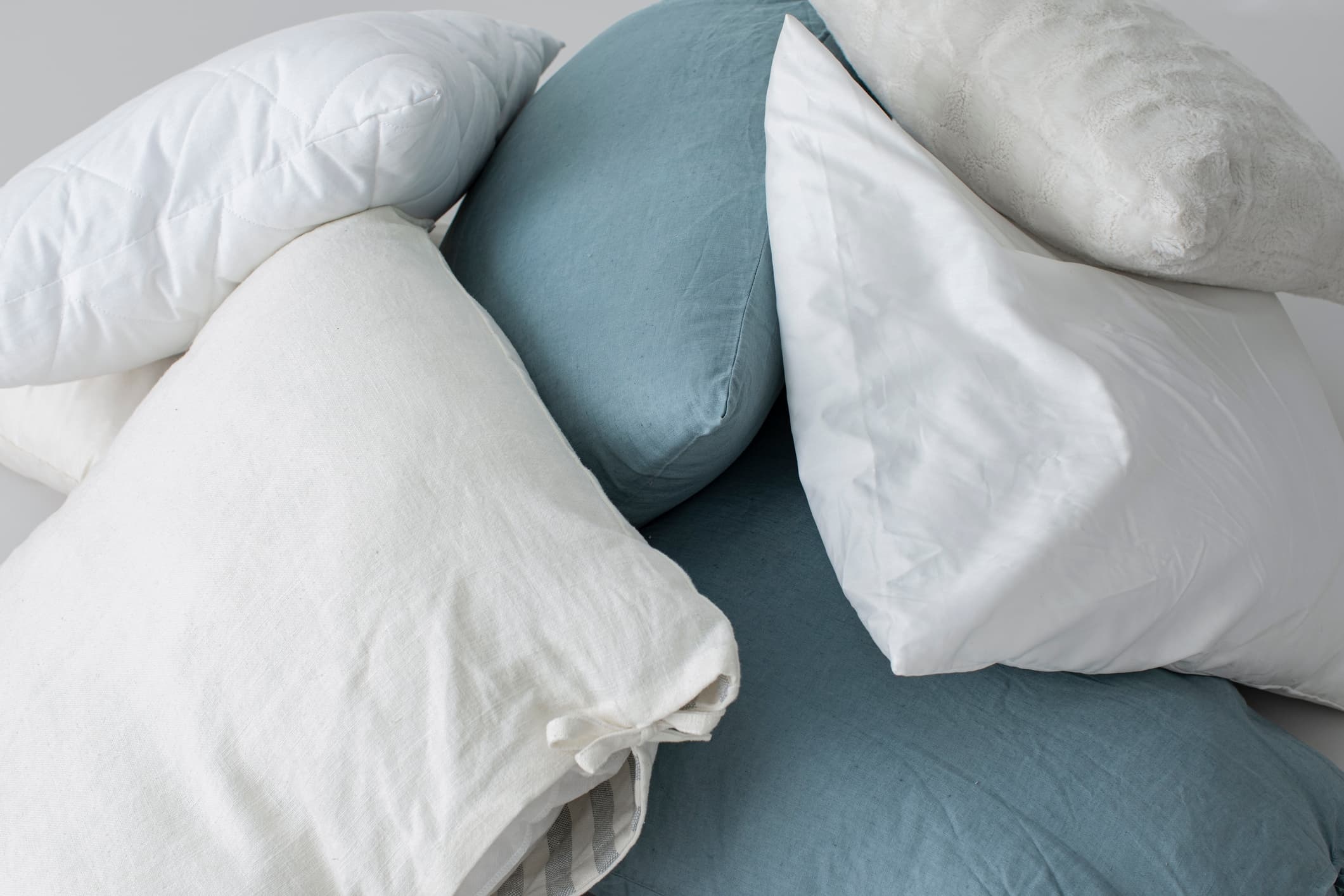
There are two kinds of people when it comes to pillows. Some buy new pillows regularly. You see them buying stacks and stacks of fluffy new pillows. You wonder what dignitary or celebrity must be visiting to warrant dropping such a large amount of cash on all those new pillows. But, then, some prefer—enjoy even—the same pillow they've had since 1987. However, knowing how to wash pillows can be a happy medium, keeping your pillows in peak condition for as long as possible.
Whether you have a pillow-buying problem or prefer your old faithful. We're sharing our best practices to keep your pillows looking fresh and feeling great on your Leesa mattress.
How Often Should You Wash Your Pillows?
Each week, you will spend approximately 56 hours on your pillow. No matter how clean your pillowcase is, it can be challenging to get it completely spotless. As you sleep, your body constantly sheds dead skin cells, which attract dust mites and their allergen-containing droppings. Consider these facts if you're scratching your head and wondering why you wash pillows.
A buildup of these substances can lead to dust mite allergy symptoms opens in new window , such as asthma, rhinitis, and itchy eyes. As if this weren't bad enough, sweat, dribble, and facial oils can also soak your pillowcase. For this reason, we recommend you wash your pillows at least two times a year. opens in new window
How to Wash Pillows in Your Washing Machine
Have you wondered: can pillows be washed in the washing machine? Or even, can pillows be washed at all? The washing machine is safe for some pillows but not for others.
Knowing how to wash pillows doesn't come naturally to all of us despite its importance. Follow the steps below to learn how to wash pillows in the washing machine safely.
Step 1: Check Your Pillow's Label
If you've wondered, "Can my pillow be washed?" the best place to start is always the pillow's label. We recommend that you consult the pillow's label for manufacturer-specific instructions. But if it has been a while since you cleaned them, keep reading to find out how to wash your pillows.
You might notice symbols on your pillow's label. For example, if you see a graphic with two numbers, the number inside the symbols represents the recommended washing temperature. The number on the bottom (outside the symbol) is the type of wash cycle recommended. For example, a 2 means a normal cycle, while a 6 means a gentle cycle is recommended.
Looking for new pillows instead of washing them? Relax in the comfort of cooling pillows, soft, breathable sheets, and more from Leesa.
Step 2: Place Your Pillow in the Washing Machine
Before washing pillows, remove the pillow cover (if there is one) and ensure your washer is balanced by washing two pillows simultaneously. It is a common misconception that pillows should be washed on the machine's bulky cycle. This cycle should be reserved for heavy-duty items such as comforters. Instead, wash your pillow on your machine's gentle cycle to protect your pillow's structure.
Next, add a gentle, clear detergent and an optional 1/4 cup of bleach to your washing machine. Use only a tablespoon of detergent to prevent too many suds. Run the wash cycle at a warm temperature but avoid extra-high temperatures.
After the washing cycle, rinse your pillows and spin them dry. Using low or medium heat on a low-tumble setting would be best to help protect your pillow while drying. Due to varying models of dryers, the time it takes to dry your pillows may vary. If they are not fully dry, you may need to air dry the pillows partially until completely dry.
Step 3: Air Them Out
When you make your bed in the morning, take a second to fluff and reshape your pillows. This will help remove some dust, but daily fluffing isn't enough. At least once a month, on a bright and breezy day, hang them outside on a clothesline.
If you don't have access to this kind of space, you can run them through the dryer on air fluff or a no-heat cycle. Add a couple of tennis balls or dryer balls for extra fluffing power.
How To Wash Pillows: Other Types
Specialty pillows, such as down, feather, polyester, or memory foam pillows, may have different washing instructions. Before washing any pillow, always remove the protective cover over your pillow and wash it later.
Explore below to learn how to wash down pillows properly to prevent damage.
How to Wash Down or Feather Pillows
When washing down pillows, putting two pillows in your washer at a time may be helpful to balance the load. You could add a blanket or another pillow if you don't have two feather pillows. Wash your pillows in cold water only by following these steps:
1. Set your machine to the gentle cycle to protect the feathers of your down pillow.
2. Choose a mild detergent free from chemicals and fabric softeners. When washing down or feather pillows, choose a laundry detergent that does not sud too much. You won't need as much detergent as a normal load of laundry. This helps to prevent excess soap residue on your pillow and reduces the chances of feathers clumping together. If you suspect excess soap residue, run an extra rinse cycle to ensure all the soap is out of your pillows.
3. Place your pillows in the dryer on low to medium heat. You'll have to babysit them a bit and pull them out every 20 minutes. This is to redistribute the filling and break up any clumps that may have formed. The safest way to dry down or feather pillows is by using the no-heat cycle. However, this can be a time commitment if you need your pillows dried quickly.
4. Enjoy your freshly washed and dried pillows!
How to Wash Polyester Pillows
Polyester pillows are less delicate than down or feather pillows. To wash polyester pillows, simply run them through a gentle cycle using regular detergent on a warm water wash. But, again, use only a little detergent. It will go a long way.
After washing, dry your polyester pillows on a dryer cycle that uses medium heat. You should also throw in some wool balls to keep your pillows extra fluffy. As always, it's recommended to read the label of your pillow before starting a wash or dry cycle.
How to Wash Memory Foam Pillows
When it comes to washing a memory foam pillow? It's important to note that completely immersing it in water (a.k.a. putting it in the washing machine) is not recommended.
Why can't you put a memory foam pillow in a washing machine? The machine's agitator will break up the structure of the foam. It may tear the material and can permanently damage it. Also, putting a memory foam pillow in the dryer is a fire hazard. Not to mention, the density of the foam will make it difficult for the pillow to fully dry.
If you need to wash the actual memory foam insert, use a vacuum attachment. This will get any dirt or dust that's deep in the pillow. We also recommend doing this for your mattress at least once every season.
When Should You Replace Your Pillows?
Even if you know how to wash pillows properly, it’s a good idea to replace them every two to three years.
As we mentioned, you may know someone who has had the same bed pillows for as long as you can remember. Pillows collect allergens, dust mites, and, yes, dead skin cells (that's what makes pillows get heavier over time). So some sleep and allergy specialists recommend purchasing new pillows every two to three years. However, purchasing an anti-allergy pillow cover can help extend the life of your pillow.
Another way to tell your pillow is ready to be tossed is to fold it in half. If you can fold your pillow in half and it doesn't spring back to its original supportive shape? It might be time to invest in a new one so your head and neck are properly supported.