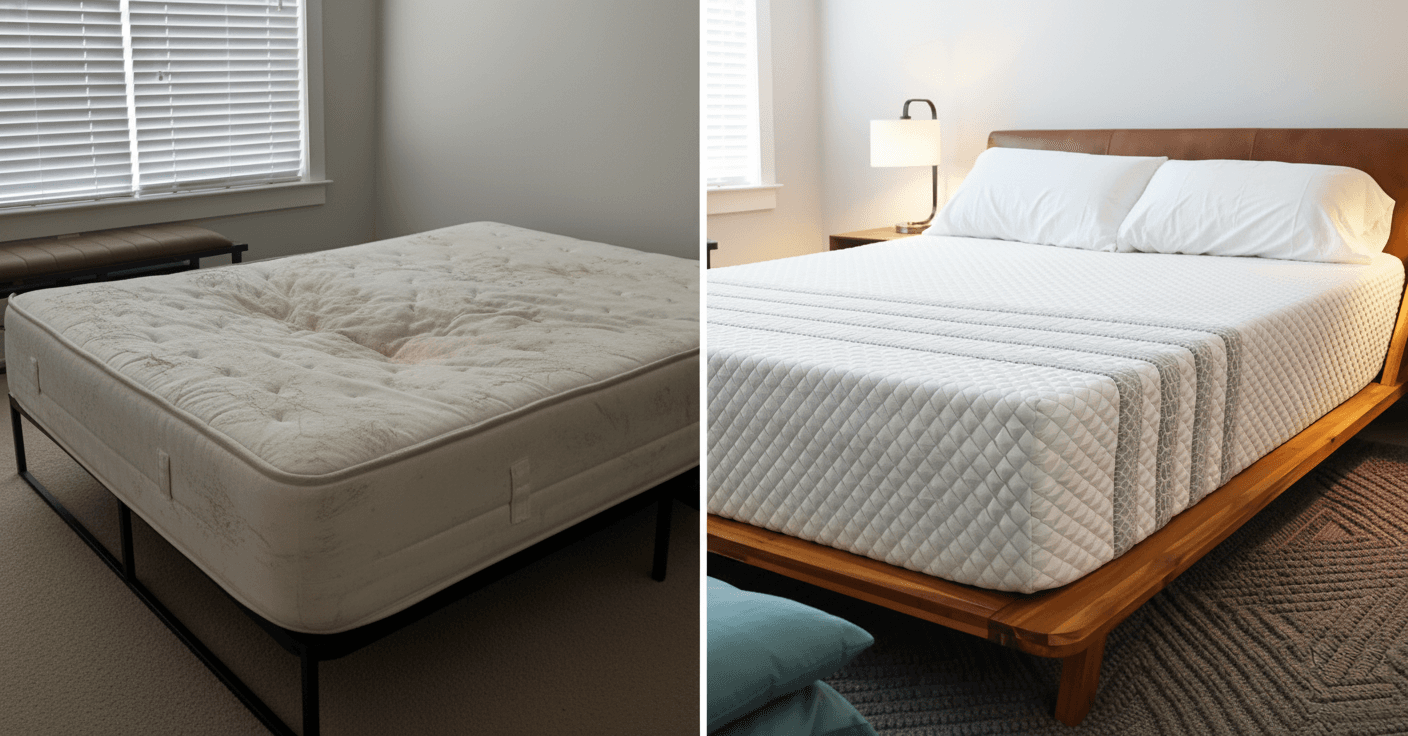

The average mattress costs between $800 and $2,500—making it one of your bedroom's biggest investments. Yet most people unknowingly cut their mattress lifespan in half through improper care, costing them thousands in premature replacements.
Quality mattresses are engineered to last 7-10 years with proper maintenance, but without it, you'll see sagging, wear, and diminished support in just 3-5 years.
The difference? Simple mattress care tips that take minutes but save you years of comfort and hundreds of dollars.
Whether you just invested in a new Leesa mattress or want to extend your current mattress's lifespan, this comprehensive guide reveals proven techniques to double its lifespan. From proper support systems to strategic rotation schedules, these evidence-based practices protect your investment while ensuring deeper, more restorative sleep year after year.
Mattress Lifespan By the Numbers:
Your mattress's lifespan isn't a mystery—it's measurable science. Understanding these benchmarks helps you maximize your investment and recognize when it's time to upgrade.
Average Lifespans by Mattress Type:
Memory Foam: 8-10 years with proper care, 4-6 years without
Hybrid: 9-12 years maintained, 5-7 years neglected
Traditional Innerspring: 6-8 years optimal, 3-5 years typical
Natural Latex: 12-15 years with protection, 8-10 years exposed
The Degradation Timeline:
Year 1-2: Loses 10% of original support without rotation
Year 3-4: Body impressions deepen to 1.5 inches (warranty threshold)
Year 5-6: 25% reduction in pressure relief capability
Year 7+: Structural breakdown accelerates—sagging increases 40% annually
Critical Wear Factors:
Weight impact: Every 50 lbs of body weight accelerates wear by 8-12 months
Usage hours: 8+ hours nightly use = 2,920 hours annually of compression
Movement frequency: Active sleepers cause 30% more wear than still sleepers Environmental exposure: Uncontrolled humidity reduces lifespan by 2-3 years
Start with Proper Support
Hopefully, we’re past the days when a bare mattress on the floor is acceptable; however, increasing your mattress lifespan requires more than any old bed frame.
The Foundation Matters: Choosing the Right Base
Whether you buy hybrid, foam, or innerspring mattresses, proper mattress care requires a solid foundation to prevent uneven weight distribution. Improper support leads to sagging and early wear. This is because mattresses undergo nightly compression in specific areas. Even if you don’t have a favorite side of the bed, even if you’re constantly moving in your sleep, some parts of the bed rarely get slept on.
This results in uneven wear over time if the bed isn’t supported properly. A durable, adjustable bed frame will keep your mattress in great shape while supporting good sleep habits. A frame like Leesa’s Adjustable Base has movable head and foot positions controlled by a wireless remote. It pairs with any Leesa mattress for an easy, elevated sleep experience that lasts.
Protect Your Investment
When you take care of your mattress, it will take care of you. It’s a wonderful symbiotic sleep-susationship. Learn how you can use a mattress protector to keep your bed safe and clean.
Shield Your Mattress from Daily Wear
Technically, your bed should be primarily for nighttime sleep. No eating, drinking, no naps. Proper sleep hygiene (PDF) allows only two activities in bed: sleeping and the horizontal tango. Still, many people enjoy all kinds of activities in bed and maintain good sleep habits.
You may wind down in bed with your favorite TV show or enjoy a glass of wine while reading a book. These habits may not be the best possible way to get good sleep, but they’re a part of your routine and bring you joy. This extra daily wear means you need special protection to defend against spills, stains, and moisture. Without a protector, moisture from spills or sweat can even degrade foam and cause springs to rust.
Even if you have perfect sleep hygiene, you still need a protector to ward off dust mites and allergens. Dust mites are little pests that can live in your mattress, increasing dust allergens and triggering asthma.
Keeping your mattress safe from harm means purchasing the right fitted mattress protector. Here are some excellent options from Leesa:
Leesa Ultra Cool Mattress Protector: hypoallergenic fabric with high thermal conductivity fibers that draw heat away
Leesa Waterproof Mattress Protector: 5-sided protection that's machine washable, great for busy adults
Leesa Mattress Encasement: 360° protection against spills, dust mites, and bed bugs
Most mattress protectors are easy to maintain. You only need to wash them every few months or immediately after spills. Keep in mind that most mattress warranties will void coverage if the mattress is pretty dirty. Protectors don’t just keep you clean and safe; they maintain warranty coverage, too.
Rotation and Positioning
Most mattress owners are confused about when and how to rotate their mattress. It isn’t rocket science, but rotating your mattress isn’t intuitive, either.
Distribute Wear Evenly
Leesa mattresses should never be flipped. Their layered construction is designed to perform with the striped side facing up at all times. Instead, proper rotation is the key to keeping your mattress comfortable and helping it wear evenly.
For a brand-new Leesa mattress, rotate it once a month for the first three months to help the materials settle uniformly. After that, rotate it every three to six months. To rotate, simply turn the mattress 180 degrees from head to foot so the sleep surface continues wearing evenly.
While many older or double-sided mattresses required flipping, most modern models, including all Leesa mattresses, are single-sided and not designed to be used upside down. Just keep yours on a sturdy bed frame and rotate it regularly for long-lasting comfort.
Regular Cleaning Routine
Everyone has different cleaning standards, but when it comes to mattress longevity, you need a specific routine. This is especially true if you’re a night sweater. There’s no shame in the sweating game, but bodily fluids like this can seep permanently into your mattress if you’re not careful.
Keep Your Mattress Fresh and Clean
Keep your mattress clean, no matter your sleep habits, with the following best practices.
1. Vacuum Mattress Surface
Give your mattress a quick monthly refresh by running your vacuum’s upholstery attachment over the entire mattress surface. This simple step whisks away dust, crumbs, and whatever mysterious fuzz accumulates over time. Think of it as a mini spa day for your bed.
2. Baking Soda
When your mattress needs a deeper detox, bring out the baking soda. Sprinkle a generous layer over the surface, let it hang out for a few hours, and then vacuum it up. This natural deodorizer helps neutralize smells and discourages dust mites, leaving your bed smelling fresher than a crisp morning breeze and feeling extra cozy at night.
3. Spot Cleaning
Spills and sweat can cause discoloration in your mattress. You need to treat these spots before it’s too late. Mix a little mild detergent with water in a spray bottle, and lightly mist the spot. Then, gently blot with a clean cloth and avoid scrubbing. This will only push stains deeper into the mattress.
4. Avoid Saturation
Mattresses and moisture are not friends. When cleaning, always keep things on the drier side. Oversaturating can trap dampness inside the layers, creating the perfect environment for mold. Once your mattress gets mold growth, it’s pretty much over.
5. Annual Deep Clean
Once a year, give the entire surface the star treatment with a full deep clean. The best way to deep clean is with a steamer. You can use a compact handheld model or a full-size steam cleaner; just follow the manufacturer’s guidelines and make sure the mattress dries completely afterward. Fresh, clean, and good as new.
The Protection Multiplier Effect:
Studies from the International Sleep Products Association reveal that combining these three practices extends mattress life by an average of 4.7 years:
Waterproof protector: Adds 2-3 years by preventing moisture damage
Quarterly rotation: Adds 1.5-2 years through even wear distribution
Proper foundation: Adds 1-2 years via consistent support
Bottom line: A $1,400 Leesa mattress protected and maintained costs $140 per year over 10 years. The same mattress neglected costs $467 per year when replaced every 3 years. That's a $3,270 difference—enough for a complete bedroom upgrade.
Optimize Your Sleep Setup
Dead skin cells, body oils, pet dander, and just general bad odors stuck on your bedding and pillows can affect your mattress over time. Proper maintenance means cleaning your entire bed ecosystem. On top of this, the quality of your sleep setup is important for healthy sleep hygiene.
The Complete Sleep System
Worn pillows can actually exacerbate uneven mattress wear, and they may have a lot more gunk in them than you realize. Dirty pillows can even make you sick, since they can carry all types of germs. This bacteria can easily travel into your bed and dirty your entire sleep system.
The best strategy is to replace pillows every 18 to 24 months. Not only does this limit health hazards, but it also guarantees a supportive, quality pillow for proper alignment. When it’s time for replacement, these are some of the best options:
Premium Latex Pillow: buoyant and breathable for proper alignment
Adjustable Chill Pillow: customizable fill with cool-to-touch cover
Pillows aren’t everything. A complete sleep system includes properly fitted sheets that prevent bunching and a room environment that maintains a healthy 30% to 50% humidity. This humidity level helps reduce allergens and decrease instances of wakefulness.
Smart Daily Habits
Just take things one sleep at a time. Add new maintenance practices bit by bit until you have a healthy system that increases the lifespan of your mattress. You got this.
Everyday Practices That Make a Difference
These are the everyday steps that eliminate lingering smells and keep your mattress in excellent shape.
Avoid sitting on bed edges repeatedly
No jumping on the mattress
Clean bedding regularly
Pet considerations: check for sharp claws, consider extra protection
Let the mattress air out when changing sheets
Address issues like spills early
Know When It's Time
Not sure whether your mattress has reached its expiration date? Here are the biggest clues that it’s time to retire your old bed and upgrade to nights filled with better, deeper, happier sleep.
Signs Your Mattress Needs Replacing
The brass tacks show that the average lifespan is 7 to 8 years for innerspring, 8 to 10 years for memory foam, and 10 to 15 years for latex. Hybrid lifespan sits somewhere around 8 to 10.
Mattresses can definitely go past their retirement age, but you should definitely get a new mattress once you also notice the following warning signs.
Visible wear and tear
Mattress fibers will break down over time. If you see sagging, deep body impressions, or ripped fabric, the message is loud and clear: your mattress is tired. Even squeaky coils are an early warning that the internal structure is breaking down. If your bed is talking back to you, it’s officially time to shop for a new one.
Chronic sleep problems
If you’re regularly waking up tired or feeling like your brain is still buffering, your mattress may be the culprit. Even if it doesn’t look saggy, the internal materials can still break down over time, meaning less adequate support, more tossing and turning, and a whole lot of lost sleep. And if your bed no longer matches your preferred firmness or sleep position, it might be sabotaging your rest without you even realizing it.
Allergy and asthma flare-ups
Are you waking up congested, sneezy, or breathing like a broken accordion? Your mattress might be harboring a tiny army of allergens. As mentioned, a mattress protector and regular cleaning schedule can help prevent this. However, you can reach a point of no return when the allergen buildup is too much to remove.
Aches and pains
Morning aches that make you feel like you aged a decade overnight are often a sign that your mattress has stopped supporting you. When a bed can’t keep your spine aligned, your back, hips, shoulders, and neck all pay the price. Replace it, and you may discover many of those “getting older” pains were actually just “sleeping on an old mattress” pains.
Level Up Your Sleep: Leesa’s Tips for a Lasting Mattress
By now, you’re basically a certified mattress expert. With the right support system, a little protective armor, a regular clean-up routine, and smart daily habits, you’re setting your mattress up for the longest, happiest life possible. Get ready for better sleep, fewer aches, fewer allergens, and years of cozy nights without the heartbreak (or price tag) of replacing your mattress too soon.
Leesa has got the tools, protectors, and sleep upgrades to help you extend your mattress’s life, and when it's time for a replacement, we’ve got you. Here’s to more dreamy nights and a mattress that stays in great shape for years.
FAQs
How long should a mattress last?
A quality mattress should last 7-10 years with proper care. Memory foam and hybrid mattresses typically last 8-10 years, innerspring mattresses 7-8 years, and latex mattresses can reach 10-15 years. However, without proper maintenance like using a mattress protector and regular rotation, that lifespan can be cut in half. Signs it's time to replace include visible sagging, chronic sleep problems, or waking up with unexplained aches.
How often should I rotate my mattress?
New mattresses need monthly rotation for the first three months, then every 3-6 months afterward. Rotate your mattress 180 degrees from head to foot—this distributes wear evenly and prevents body impressions from forming in one spot. Most modern mattresses, including all Leesa models, don't need flipping since they're designed with specific comfort layers that should stay on top.
Do I really need a mattress protector?
Yes, a mattress protector is essential to extend mattress lifespan. It shields against spills, sweat, dust mites, and allergens that can break down foam and cause springs to rust. Even perfect sleepers need protection—body oils and dead skin cells accumulate over time, potentially voiding your warranty. The Leesa Waterproof Mattress Protector offers 5-sided protection and is machine washable for easy maintenance.
What's the best way to clean a mattress?
The best mattress care tips include monthly vacuuming with an upholstery attachment, spot cleaning stains immediately with mild detergent, and an annual deep clean. For deodorizing, sprinkle baking soda across the surface, let it sit for several hours, then vacuum. Never oversaturate your mattress—excess moisture can lead to mold growth. Always let your mattress air dry completely between cleaning and making the bed.
Can a bad bed frame damage my mattress?
Absolutely. An inadequate foundation causes uneven weight distribution, leading to premature sagging and wear. Your mattress needs consistent support across its entire surface. Check your frame every 3-6 months for stability and ensure slats are no more than 4.5 inches apart. An adjustable base provides optimal support while eliminating the need for a box spring.
When should I replace my pillows?
Replace pillows every 18-24 months to maintain proper spinal alignment and extend mattress lifespan. Worn pillows create pressure points that cause you to shift positions frequently, leading to uneven mattress wear. Old pillows also harbor allergens and bacteria that can transfer to your mattress. Consider upgrading to the Leesa Premium Latex Pillow for lasting support and natural breathability.
What damages a mattress the most?
The biggest mattress killers are moisture (from spills or excessive humidity), lack of support, repeatedly sitting on edges, jumping, and never rotating. Pet claws, eating in bed, and going without a protector also significantly shorten lifespan. Following simple mattress care tips like maintaining 30-50% room humidity, using proper support, and addressing spills immediately can double your mattress's life.